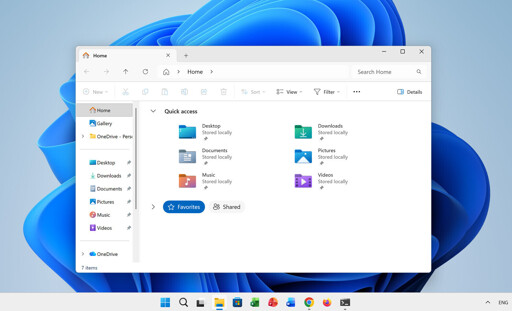
Just a week ago, we discussed Microsoft's efforts to enhance File Explorer performance by preloading the application at startup. Recent testing by Windows Latest suggests that this approach results in diminishing returns, as the application uses more RAM while offering only marginal performance impr...


The issue is when it’s used inefficiently or for useless purposes. An unoptimized application takes 500MB of extra memory and that is 500MB that cannot be used for read/write caching nor another application, and 500MB closer to an OOM situation.
In theory, an application can suffer from issues of underutilization of memory, just as one that over-utilizes memory. In practice, I find that lower-than-expected memory use is a much more positive indicator of an optimization-focused project than one that uses more memory than expected.
If your system uses caching, then “usused” memory may not be so. Memory used for caching is also cleanly “Available” for use if needed. This is not the case with the 500MB of extra memory a process might decide to capture. Of course this is complicated further with swap (I wouldn’t use it).
This is my point.