

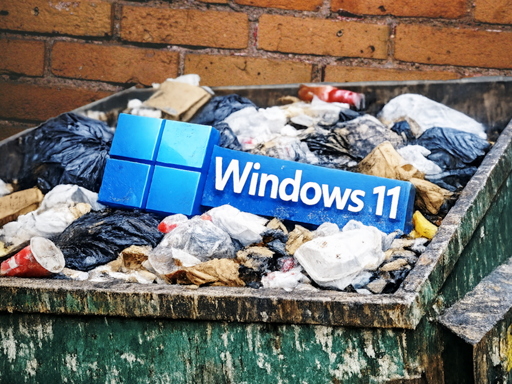
There. That’s out of the way. I recently installed Linux on my main desktop computer and work laptop, overwriting the Windows partition completely. Essentially, I deleted the primary operating system from the two computers I use the most, day in and day out, instead trusting all of my personal and work computing needs to the Open Source community. This has been a growing trend, and I hopped on the bandwagon, but for good reasons. Some of those reasons might pertain to you and convince you to finally make the jump as well. Here’s my experience.
[…]
It’s no secret that Windows 11 harvests data like a pumpkin farmer in October, and there is no easy way (and sometimes no way at all) to stop it. The operating system itself acts exactly like what was called “spyware” a decade or so ago, pulling every piece of data it can about its current user. This data includes (but is far from limited to) hardware information, specific apps and software used, usage trends, and more. With the advent of AI, Microsoft made headlines with Copilot, an artificial assistant designed to help users by capturing their data with tools like Recall.
[…]
After dealing with these issues and trying to solve them with workarounds, I dual-booted a Linux partition for a few weeks. After a Windows update (that I didn’t choose to do) wiped that partition and, consequently, the Linux installation, I decided to go whole-hog: I deleted Windows 11 and used the entire drive for Linux.
For beginners I recommend Mint. It just works and it has the most compatible software.
What do you mean it has the most compatible software? How does its software differ from that available in other distros?
It’s based on Ubuntu and just about everything will run on it. Including Steam games. Also it’s very stable, some other distros might update and break something. If you just want something that works, I would suggest Mint.
Expect that the app store default to flatpack packages, so installing a tool that normally requires 100 KiB takes up 4 GiB.
It doesn’t make any sense.
That is because you already had the dependencies installed on your system. Flatpak can share dependencies as well so if you use a lot of them it doesn’t really make much of a difference. And since it’s bundled together it is great for having up to date apps on distros that are not rolling. Also good at isolating apps with different toolkits from mucking up your system.
That’s a downside but most people would rather just have the software work and not have to fiddle with the command line.
In the age of a 1TB SSD costing $50 . . . frankly who cares. Flatpak’s are the easiest to deploy Linux packages . . . a perfect pairing for Mint - an OS designed to “just work”.
While your statement does make sense for now, the prices of storage are going up at an alarming pace. We all need to account for this moving forward.