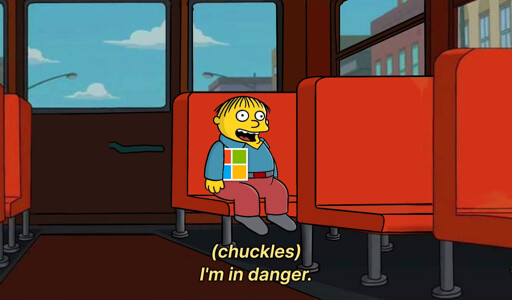
When you think Microsoft you probably don't think sense of humor. And yet, I'm convinced that Microsoft is going to do a very specific *very* funny thing within our lifetimes.
This is not all that’s required. Backwards compatibility is also a hard requirement. If WINE does not model the precise bug that allows Office 97 (or whatever) to still run then you will not be bringing people along. The number of machines using some random piece of hardware whose most recent driver was written for Windows Vista is probably also a significant enough chunk to be a problem.
That’s a good point and I don’t disagree. Like I said I think this is still a long shot, but it’s interesting to try and consider the possibility.
I’d argue with the way they’re pushing Windows 11 and the hard TPM requirement (though usually not an issue in the enterprise world) they’re already going down the path of sacrificing backwards compatibility.
It’s just enshittification again, corporations are customers of Microsoft at the end of the day and as enshittification goes, it will see Microsoft generating all value away from the customers and for themselves. This long tail of backwards compatibility has been an albatross around their neck and I think there’s only so long they’re willing to tolerate the cost of it. I don’t believe the respect for their corporate customers exists much more than that of the average consumer anymore, do you?
Modern corporations don’t even have that issue as much, so many of them are already relying on SaaS for a large part of their infrastructure. Legacy industries are more of a problem but if you need to virtualize some AS/400 shit, Azure already has you covered: https://learn.microsoft.com/en-us/azure/architecture/example-scenario/mainframe/ibm-system-i-azure-infinite-i . They’re going to wield their market dominance as a cudgel and it’s going to be your problem to adapt.

This is not all that’s required. Backwards compatibility is also a hard requirement. If WINE does not model the precise bug that allows Office 97 (or whatever) to still run then you will not be bringing people along. The number of machines using some random piece of hardware whose most recent driver was written for Windows Vista is probably also a significant enough chunk to be a problem.
That’s a good point and I don’t disagree. Like I said I think this is still a long shot, but it’s interesting to try and consider the possibility.
I’d argue with the way they’re pushing Windows 11 and the hard TPM requirement (though usually not an issue in the enterprise world) they’re already going down the path of sacrificing backwards compatibility.
It’s just enshittification again, corporations are customers of Microsoft at the end of the day and as enshittification goes, it will see Microsoft generating all value away from the customers and for themselves. This long tail of backwards compatibility has been an albatross around their neck and I think there’s only so long they’re willing to tolerate the cost of it. I don’t believe the respect for their corporate customers exists much more than that of the average consumer anymore, do you?
Modern corporations don’t even have that issue as much, so many of them are already relying on SaaS for a large part of their infrastructure. Legacy industries are more of a problem but if you need to virtualize some AS/400 shit, Azure already has you covered: https://learn.microsoft.com/en-us/azure/architecture/example-scenario/mainframe/ibm-system-i-azure-infinite-i . They’re going to wield their market dominance as a cudgel and it’s going to be your problem to adapt.