

48·
7 days agoDon’t let this story distract from the far more important news of Rockstar firing 33 employees for forming a union, making up a flimsy excuse after the fact, and getting a judge to deny interim relief to the fired workers.
Formerly /u/Zagorath on the alien site.
Don’t let this story distract from the far more important news of Rockstar firing 33 employees for forming a union, making up a flimsy excuse after the fact, and getting a judge to deny interim relief to the fired workers.
Geez on the evidence they’ve shared here, Rockstar has so obviously fucked up.
The best piece of evidence in their favour is that employees discussed, in a space open to former employees and an external union representative, that the number of people allowed on leave at a time is heavily restricted because they need to be able to get 32 people together at once to test an online game feature. Rockstar claims this reveals information so sensitive their barrister wouldn’t even read that part out in court, only in written submissions. The idea of “an online service that can support at least 32 users” is TOP SECRET and worth insta-firing 33 people with no hearing, according to Rockstar. As the video points out, it really feels like they’ve trawled through the evidence to find a post-hoc justification for the firings.
It’s what I wrote before learning the actual judgment.
I am absolutely shocked that it went the way it did. Apparently interim relief is a very high burden, so this doesn’t necessarily mean they don’t have a decent chance of winning the substantive case. But still…without knowing the details not the applicable law, it certainly feels ridiculous given how blatantly terrible Rockstar’s argument is.
At least how it’s framed in this and PMG’s previous videos on the topic.
i’m considering mailing the school about it as well
Never mind this facial age check thing, have you seen the People Make Games exposés into Roblox’s child endangerment/exploitation? Anyone who lets their kids play Roblox should at least be paying close attention to their kids’ use of the game. Even more so than on any game.

Oh yeah, the “run headless” tip too was great! I would never have used a desktop environment, and would in effect have been using it headless. But had you and others not specifically suggested running it as headless it would probably not have occurred to me that that’s a setting change I’d need to make while installing it.

Absolutely!
The “Look What They Need to Mimic a Fraction of Our Power” meme, showing two frames of Omni-Man from Invincible. Omni-Man has an image of Tux, the Linux penguin, superimposed over him in both.
In the first frame, he look out at a screenshot of a YouTube thumbnail, which reads “UPDATE ALL SOFTWARE AT ONCE! ONE CLICK! FAST & EASY! 100% FREE!”, and a title which reads “Update All Software on Windows PC at Once | One-Click Method (Fast & Free).”
In the second frame, he says “Look what they need to mimic a fraction of our power”.
Tux’s right eye being occluded by the guy’s black hair, and his left eye being partly shaded into a more angular shape makes it look like he’s giving an evil smirk.
Thanks! I genuinely wasn’t sure how much RAM would be necessary, and would have probably seriously considered 8 GB enough if I hadn’t gotten the feedback.
I’ve no comments on RISC-V, but I agree that a move towards ARM in the Windows & Linux worlds would seem sensible. I would guess it hasn’t happened for the same reason IPv6 hasn’t taken over. Too much momentum. Too many developers still working in an x86 world, too many legacy apps that won’t easily run on ARM, too many hardware manufacturers each making the individual choice to keep making the current-popular option. Apple could transition because they’re the single gatekeeper. They make the decision, and everybody else who wants to use a Mac has to follow along. I’m going to guess that the control they have over the hardware and the software also means Rosetta 2 works a hell of a lot better than Microsoft’s Prism. (I can’t say for sure, having never used an ARM-based Windows machine or an ARM-based Mac.)
In terms of heat, what kind of room do you have it in? Somewhere with good natural airflow, or away in a closet somewhere?
I guess I have the same question for you as I did for curbstickle. What’s the advantage of doing things that way with VMs, vs running Docker containers? How does it end up working?
Interesting. I’ve never really played around with that style of VM-based server architecture before. I’ve always either used Docker (& Kubernetes) or ran things on bare metal.
If you’re willing to talk a bit more about how it works, advantages of it, etc., I’d love to hear. But I sincerely don’t want to put any pressure and won’t be at all offended if you don’t have the time or effort.
I’m not sure I agree with your definition of walled garden. I’d say it’s a place that’s designed to be nice and easy to use within the bounds designed for you (the garden), but which protects the user from doing something that might harm them, even if that “protection” comes at the cost of being able to do other things they want to do, in a kind of paternalistic way (the wall). The classic example would be iOS, where the only apps you can install are the ones Apple has approved for you. Getting apps from the open web the way you would on Windows, macOS, or Linux could be dangerous!
Your description of:
you may run into roadblocks doing things that way, yes. You are pretty much limited to what’s on their (vast) catalog
Makes it sound very much a walled garden to me. Not as high-walled as iOS of course, but it’s a spectrum.
But anyway, it’s basically semantics. Not that important what you call it.
Not at all. It’s completely open source
Being open source doesn’t necessarily preclude being a walled garden. If (and I fully admit I could be completely wrong about this) it makes it easy to do certain things through a friendly UI, but it becomes much harder or more awkward (or impossible) to do things that aren’t explicitly supported, as part of a deliberate design decision/tradeoff for that usability.
Anyway, thanks a heap for answering all my questions. Has been very helpful.
if I’m doing virt though
What’s the use case for that? My plan has been to run a single server with a handful of Docker containers. No need for more complex stuff like load balancing or distributed compute.
Yunohost automates this stuff, if that’s what you’re looking for
I’m not familiar with Yunohost, but a really quick search makes it look like kind of a walled garden? I already have a walled garden with the Synology, and for a NAS I think that’s fine and I’m happy using the tools that come with it, but the shortcomings of such a system are precisely why I’m wanting to get a more standard Linux server to actually run my applications. If my first look at Yunohost is correct, I very much doubt it would be suitable for me.
Someone else suggested Caddy. And between their recommendation and some of the stuff I’ve come across when trying to install Nextcloud already, I think that if I do decide the Synology reverse proxy is insufficient, that’s probably what I’d go with.
I don’t see any reason to continue doing that.
The simple answer is just that it’s easy. I don’t have particularly complex needs right now. These two tools are already installed. I haven’t done very much with them, but what little I have done has shown itself to be really, really easy. And I don’t know what I would actually gain from a more manually approach. Definitely open to the idea of doing it myself if there is a particular reason for it though.
The one thing Intel is better at is hardware transcoding. So if you want to run Plex, Jellyfin, etc.
Ah ok yeah, thanks. So video transcoding is the only reason to consider Intel over AMD, then? I don’t have immediate plans to run Jellyfin, but it’s one of many things at the back of my mind I might want to do, so I’ll keep it in mind. It’s easy enough to have Jellyfin run on a server which accesses files stored on the Synology, and have transcoding take place on the server, right?
Thanks for all the help!
Wow thanks, a lot of great advice in here!
I actually do have an old m2 drive sitting around somewhere, if I can find it. I think it was an m2 SATA (not NVMe) drive though, so not sure if there’s any advantage over a 2.5" other than the physical size.
What exactly is proxmox? A distro optimised for use in home servers? What does it do for you exactly that’s better than more standard Debian/Ubuntu?
Really good to know, thanks!
I take it ARM still not there package wise
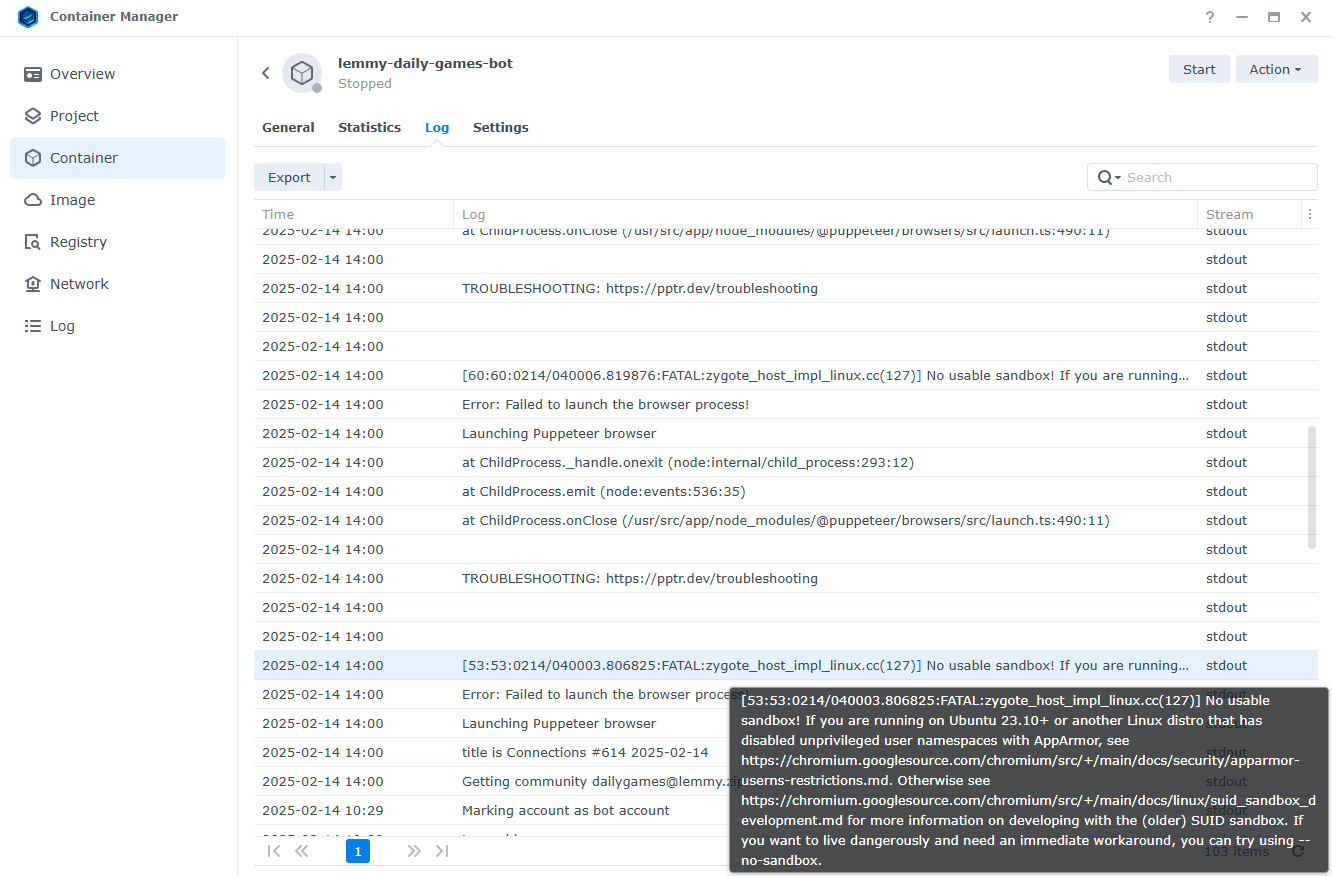
I think for a lot of use cases it might be there. Unfortunately for me specifically, I think ARM might be the cause of part of my problems with Puppeteer, which is why I’m ruling it out.
You’re based in Brissy or further north in Qld, right? What kind of thermals does your system have, and what’s the room it lives in like?
haven’t dealt with USB attached storage before
I actually have, and if you’re interested I’d say go for it, with a couple of caveats. It worked great for me for years with my MediaWiki, torrents, and a couple of other minor web services hosted on my Raspberry Pi, with data stored on the USB external drive. I think it may have been a Seagate, even. Unfortunately I made the mistake of not backing it up, and when the external drive died I lost my data. That would be the biggest thing I’d consider if you’re looking into a USB external HDD. It’s extra important since the drive is probably not designed to be always on in the way a WD Red or equivalent is.







It’s funny cos when I was young I recall it being called (at least sometimes) ADD. So the H has been added (or made mandatory in the name) at a time when we’re realising that hyperactivity is not a necessary symptom.