
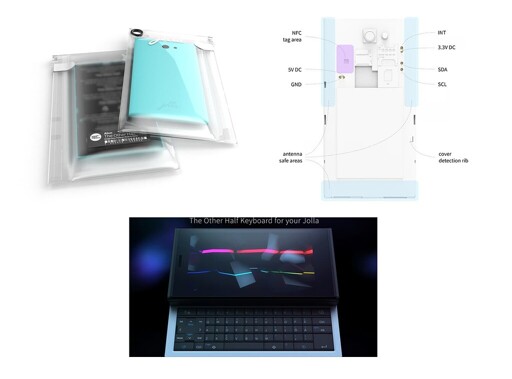
The Other Half (TOH) is a swappable back cover that does more than protect your phone — it transforms it. The original Jolla Phone (2013) pioneered this with open I2C interface and NFC-enabled covers that changed themes and behaviour just by snapping on
(…)
With the new Jolla Phone, we’re taking TOH even further — and we’ll open source the hardware and software interface specs so anyone can design, 3D-print, or produce their own modules. Primarily we plan that the new The Other Half interface would be based on I³C.
Nokia isn’t the same company as Jolla though.
It is the direct descendant of Nokia’s OSSO (“Open Source Software Operations”) division, both in terms of people and software.
Maybe so but being a single division in a company is very different from being an independent company anyway. I would also say that Jolla itself has certainly liked to portray themselves as “doing open source” for a long time but they have not had as concrete plans as the current ones for actually opening the OS up at any point in time before.
Got a link about it? Have they just said they plan to make it “more” open, or do they actually plan to make the full OS actually be free software, like AOSP, pmOS, or most of the other things on, eg, the pinephone software page? (note that sailfish is also listed there, but iiuc its UI and some other bits remain closed-source).
Yeah I think they’ve stopped short of really saying they’re committed to making everything free so expecting them to open more but still not everything is probably what you can realistically count on… we’ll see though.
This is the latest announcement I’ve seen on it: https://forum.sailfishos.org/t/open-sourcing-proceeding/24689
Thanks. Sorry to see my assumption was correct; that does indeed sound a lot like when they were called OSSO two decades ago.
Notably absent from the list of things they might open source soon is their current “Lipstick” UI, the graphical shell itself.
All of the stuff they plan to open source are things I didn’t even figure out were still closed from my 5-10 minutes of research before writing my previous comments. It is difficult to estimate the number (do you know how?) of other small closed components which they can dribble out over the next years to maintain users’ false hope that they will one day have an actually-open-source operating system.
my advice is: don’t hold your breath.
Sorry if this sounds bitter, but it’s because I am - I naively believed that OSSO might actually ship a free OS one day (to be fair they didn’t say they would either, but they helped us believe that they might… in effect saying “we’ll see” for years while releasing bits here and there) and it was frustrating to realize that it was never a real possibility.