Every time I decide to watch one, I am blown away by how much better it looks than anything you can stream. In particular with dark scenes, where streaming often looks so poor due to artifacting. No contest at all.
I’m more shocked that so many have given up on physical media in the name of convenience, tbh. Not only does it look better but I can buy it once and not have to care about how the corpos decide to shuffle content this week or next.
Video compression has its limits. A modern BD release has a bit/pixel value of around 0.5 - 0.7, while streaming copies are around 0.1 - 0.2. You’re going to lose detail even if you use AV1 or H265.
Then you also have the problem that certain content (naval/oceanic scenes, storms, jungles) doesn’t compress as well.
IMO we are also starting to see lower “returns” with every new codec generation. MPEG4 ASP (Xvid) to H264/AVC was a massive jump. H264 to H265 (or even AV1) was IMO a much smaller jump.
Got to disagree with you on that one. It was universally true for the move from ASP/H263 to AVC/H264. It’s not the case with H264 to H265 on a universal basis.
You can forget about such results if you’re dealing with grain (and preserving it). Things are a bit better with “complex” content
(oceans, snow storms etc), but you’ll be struggling to get 50% space savings (more so with pre 2005 content).
The general bitrate level is also a massive factor.
Low bitrates, sure, even more than 50%. But you’ll still be dealing with artifacts.
Medium to high bitrates (i.e. targeting a “near transparent” encode), you often won’t be able to replicate a H264 encode at 12 Mbps (1080p 24 FPS) with a 6 Mbps H265 encode. Sometimes it works, but often it doesn’t; I find you often need to go with 9-10 Mbps.
Haven’t tried H266/VVC. For AV1 the x4 increase in encode times didn’t seem to be worth it at high bitrates. Although for low bitrates AV1 seems to be modestly better than H265 (for far worse encore times).
This is all for CPU encodes at the “VerySlow” preset (1/2 for AV1 if I remember correctly).
To add: some of the “magic” of AV1 is the grain analysis and synthesis. This allows you to get good results at lower bitrates, in particular with grainy footage, because you aren’t storing the grain the classical sense – you synthesize it when playing back the file, using a profile generated during encoding.
But if this is really “good” or not is a matter of opinion. By definition you are storing less data than on, say, H265, so it’s a bit of a cheat. Personally I like the results. Encode times are still bad of course, but that will be less of an issue as time goes on.
Unfortunately AV1 encodes simply take too long for me at the 1/2 preset (equivalent to very slow) with a 8c/16t CPU.
I will probably give it another go on my next build (was planning an update to Zen6, but considering the price situation, I will have to wait another 2-3 years). And honestly my 5800X/3080 system is doing fine.
That’s the one I used albeit it was older version even when I tried it in early 2025.
I always use the lowest “quality preset” (e.g. “slow”, “VerySlow” in x264/x265). The equivalent present in SVT-AV1 will was a number value (I believe 0 = placebo in x265/x264, I went 1/2).
Unless there have been massive improvements in SVT-AV1 in the last 12 months, you most likely get much longer encode time if you go with lowest quality preset equivalent in SVT-AV1.
Maybe I am missing something? Genuinely curious as I don’t have much experience with SVT-AV1 (I’ve done several hundreds of encodes of different levels of complexity with Xvid, x264, x265 over the past ~20 years).


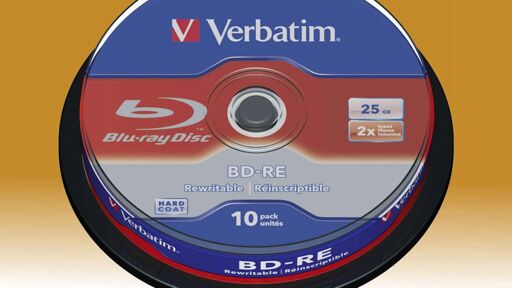
Every time I decide to watch one, I am blown away by how much better it looks than anything you can stream. In particular with dark scenes, where streaming often looks so poor due to artifacting. No contest at all.
I’m more shocked that so many have given up on physical media in the name of convenience, tbh. Not only does it look better but I can buy it once and not have to care about how the corpos decide to shuffle content this week or next.
Even the best streaming services (Apple TV+) have like 20-30% of the bitrate of a 4k Blu-ray
Video compression has its limits. A modern BD release has a bit/pixel value of around 0.5 - 0.7, while streaming copies are around 0.1 - 0.2. You’re going to lose detail even if you use AV1 or H265.
Then you also have the problem that certain content (naval/oceanic scenes, storms, jungles) doesn’t compress as well.
IMO we are also starting to see lower “returns” with every new codec generation. MPEG4 ASP (Xvid) to H264/AVC was a massive jump. H264 to H265 (or even AV1) was IMO a much smaller jump.
The jump was/is the same: Same quality with halve the bitrate.
Got to disagree with you on that one. It was universally true for the move from ASP/H263 to AVC/H264. It’s not the case with H264 to H265 on a universal basis.
You can forget about such results if you’re dealing with grain (and preserving it). Things are a bit better with “complex” content (oceans, snow storms etc), but you’ll be struggling to get 50% space savings (more so with pre 2005 content).
The general bitrate level is also a massive factor.
Low bitrates, sure, even more than 50%. But you’ll still be dealing with artifacts.
Medium to high bitrates (i.e. targeting a “near transparent” encode), you often won’t be able to replicate a H264 encode at 12 Mbps (1080p 24 FPS) with a 6 Mbps H265 encode. Sometimes it works, but often it doesn’t; I find you often need to go with 9-10 Mbps.
Haven’t tried H266/VVC. For AV1 the x4 increase in encode times didn’t seem to be worth it at high bitrates. Although for low bitrates AV1 seems to be modestly better than H265 (for far worse encore times).
This is all for CPU encodes at the “VerySlow” preset (1/2 for AV1 if I remember correctly).
To add: some of the “magic” of AV1 is the grain analysis and synthesis. This allows you to get good results at lower bitrates, in particular with grainy footage, because you aren’t storing the grain the classical sense – you synthesize it when playing back the file, using a profile generated during encoding.
But if this is really “good” or not is a matter of opinion. By definition you are storing less data than on, say, H265, so it’s a bit of a cheat. Personally I like the results. Encode times are still bad of course, but that will be less of an issue as time goes on.
Unfortunately AV1 encodes simply take too long for me at the 1/2 preset (equivalent to very slow) with a 8c/16t CPU.
I will probably give it another go on my next build (was planning an update to Zen6, but considering the price situation, I will have to wait another 2-3 years). And honestly my 5800X/3080 system is doing fine.
There are multiple AV1 encoders. SVT-AV1 was at least as fast as HEVC for the same quality/bitrate last time I tried.
That’s the one I used albeit it was older version even when I tried it in early 2025.
I always use the lowest “quality preset” (e.g. “slow”, “VerySlow” in x264/x265). The equivalent present in SVT-AV1 will was a number value (I believe 0 = placebo in x265/x264, I went 1/2).
Unless there have been massive improvements in SVT-AV1 in the last 12 months, you most likely get much longer encode time if you go with lowest quality preset equivalent in SVT-AV1.
Maybe I am missing something? Genuinely curious as I don’t have much experience with SVT-AV1 (I’ve done several hundreds of encodes of different levels of complexity with Xvid, x264, x265 over the past ~20 years).