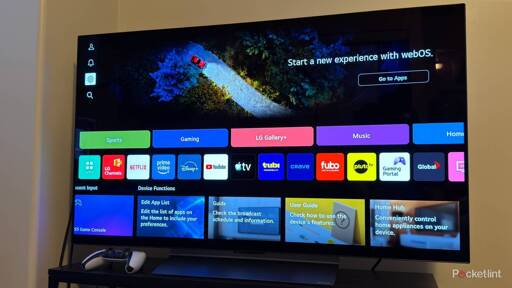
Smart TVs with an internet connection: Lets grab screenshots and send them to cooperate analysis advertisement department.

    • extremeboredom@lemmy.world
      link
      fedilink
      English
      arrow-up
      8
      arrow-down
      1
      ·
      6 hours ago

      I’m in the same boat… Somewhere out there, there MUST be a high quality panel with good contrast, viewing angles, and motion, WITHOUT the spyware garbage in it.

      • iamtherealwalrus@lemmy.world
        link
        fedilink
        arrow-up
        7
        ·
        6 hours ago

        I imagine the price of such a TV would be quite high, since the manufacturer would need to make up for the revenue lost from not having spyware.

        • Steve@communick.news
          link
          fedilink
          English
          arrow-up
          6
          ·
          6 hours ago

          They do tend to be more expensive. But not extremely so. Maybe 20-40% more than a consumer equivalent.

      • lemming741@lemmy.world
        link
        fedilink
        English
        arrow-up
        3
        arrow-down
        1
        ·
        4 hours ago

        https://arstechnica.com/gadgets/2025/12/the-ars-technica-guide-to-dumb-tvs/

        tl;dr- don’t connect the tv to a network, get an apple tv

        Digital signage displays are purpose-built for displaying corporate messages, often for all or most hours of the day. They typically have features that people don’t need for TV watching, such as content management software. And due to their durability and warranty needs, digital signage displays are often more expensive than similarly specced computer monitors.
        Again, it’s important to ensure that the digital signage is HDCP 2.2-compliant if you plan to watch 4K or HDR.
        But if you happen to come across a digital signage display that’s the right size and the right price, is there any real reason why you shouldn’t use it as a TV? I asked Panasonic, which makes digital signage. A spokesperson from Panasonic Connect North America told me that digital signage displays are made to be on for 16 to 24 hours per day and with high brightness levels to accommodate “retail and public environments.”
        The spokesperson added:
        Their rugged construction and heat management systems make them ideal for demanding commercial use, but these same features can result in higher energy consumption, louder operation, and limited compatibility with home entertainment systems.
        Panasonic’s representative also pointed out that real TVs offer consumer-friendly features for watching TV, like “home-optimized picture tuning, simplified audio integration, and user-friendly menu interfaces.”
        If you’re fine with these caveats, though, and digital signage is your easiest option, there isn’t anything stopping you from using one to avoid smart TVs.