Hello, my question is: is there big difderwnce in making m.2 nvme disk with storage of 250gb instead of 1TB or more? Maybe it is stupid question. Is there physical difference?
For commercial stuff, 256 and 512 are enough. Anything more, users will fill that shit up to the brim and now you got a deal with a TB of user crap rather than 256. At least in my experience.
Why make 4 cylinder engines when you can get 12 cylinder engines instead?
(cost, hardware requirements or restrictions, use case…)
More nand flash chips means more cost. Those chips are the highest cost in the BOM, so if a customer only needs 250GB, having a product for them means a sale instead of not a sale.
A drive with one of these:
https://www.arrow.com/en/products/sm662gxe-bds/silicon-motion-technology
Would have $14.48 of nand chips.
A drive with four of them would have $57.92 of nand chips.
I can’t tell if you’re arguing in favor or against smaller capacity drives but personally I’d like to see smaller sizes on the market for devices that don’t need a freaking terabyte of storage. When I was shopping for a small mini PC I use as a router I couldn’t find anything smaller than 256 GB so I settled for booting Alpine Linux into RAM (“diskless”) from a USB drive.
Earlier this year I needed a SSD for a PC I was going to use as a router. The smallest drive Microcenter had was 256 GB, which was massive overkill. It was also priced at $19, so I was like whatever and bought it.
With the massive increases in price for flash memory, maybe we’ll start seeing smaller drives again.
Agreed. Was looking for a micro SD for my Raspberry Pi and can’t find anything in local retail stores beneath 128GB which seems like overkill for my use-case.
And same for bootable flash drives. I hate having to use 64GB instead of a 8GB which are no longer easy to find in local retail stores. I’d settle for 16GB at this point!
You can make a ventoy drive with multiple isos on it. I have a 120gb sata SSD with USB adapter full of various isos.
Exactly! It just feels so wasteful. I imagine it’s to sell a higher capacity at greater cost for higher profit.
I look for high endurance drives which are intended for use with pi’s, dash cams, etc. they tend to come in smaller sizes due to the endurance requirements.
That’s actually what I went with. A Samsung Pro Endurance and specifically for the reason you cited since it’ll be on 24/7. But 128GB was the smallest my local store had. It was only $20 USD.
I’m sure Amazon has them in smaller varieties, but I rather go to brick and mortar.
I feel I could have gone much lower for capacity and cost and it would have been a better choice for this purpose.
Really? Are you excluding places like staples, and office depot? And walgreens?
I see walgreens sell 16gb microsd cards for $70.
You can get them small. You just gotta agree to get ripped off.
I got a miniPC 5 years ago that had a 128GB SSD in it that I used like that. When I went to get a second one last year, the same price point came with 1TB. I got it and swapped out the storage and stuck it in an external case.
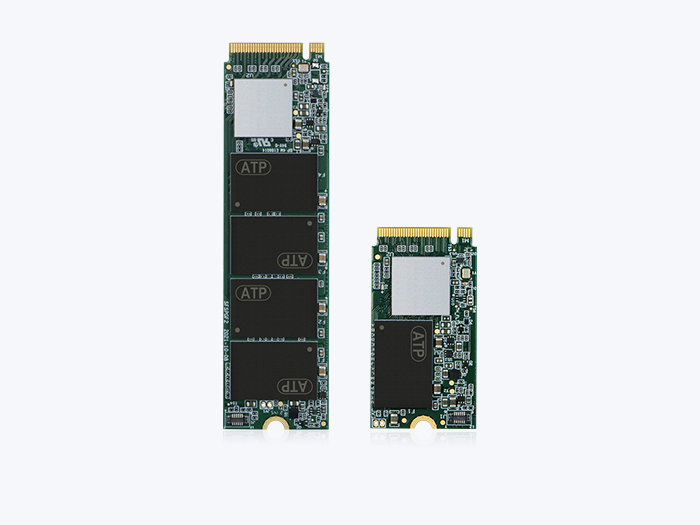
Using this image as a visual, each of the black squares is a NAND flash memory chip. If you want more storage on the device, it needs more chips on the board.
Density can vary between manufacturers, some 256 might only use one NAND chip, others may need two or more, but going up to 1TB there will generally need at least 4.
There’s plenty of garbage M.2 ssds out there with only 1 nand chip for 1TB. Pretty much any time you sort by price low to high you’ll see some of the most dire SSDs you’ve ever seen in your life. They suck too, quad chip ones are almost guaranteed to be lightyears faster.
Does this tie into TLC vs QLC drives?
Yes. NAND is also quite expensive and is the main difference between the two. Also for a 2230 size it’s significantly more compact than a 2280, so you’ll find bigger price differences on small form factor drives than large form factor.