
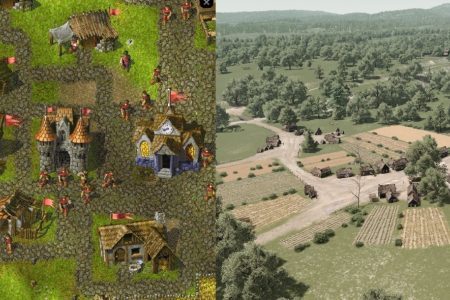
Video games aren’t supposed to be realistic, they’re supposed to be fun
Noo I want to spend 50 years before I can have a second well!
It’s still interesting to analyse them like the cultural products they are.
Yeah, examining the ways they are inaccurate tells us a lot about ourselves.
You can do all sorts of things with video games, even when sticking to realism, if it helps you achieve your goals.
Written in 2020 but still an interesting read. I wonder what the author thinks of games that have released in the intervening years, like Manor Lords, Going Medieval, and Farthest Frontier?
Well, it looks like someone did an interview with a medieval historian about Manor Lords.
Pretty insightful. Key takeaways:
- linear growth didn’t really happen like that
- pre-planning would be good
- experience of tax collectors skimming the surplus, plus hazards of rural life.
Yeah, I thought life was hard but sustainable mostly, turns out one was always at risk of extinction:
Medieval villagers were often living on the edge of subsistence. Agricultural surpluses were skimmed by the church and the feudal lords. Bad harvests, banditry, warfare and disease might decimate a village community at any time. For this very reason, the demography of many European villages remained relatively stable between the twelfth and the eighteenth century.
relatively stable between the twelfth and the eighteenth century
Hm… wasn’t there like a 33% dip back in the fourteenth, not counting subsequent migration to the cities and whatnot…?
Well then I guess the Wolfenstein games aren’t historically accurate either…?
What a shock!

It’s pretty much just a hook into infodumping about medieval cities…
In a games community…
Some of us like getting insight into the stuff that inspires the things we consume.